> ## Documentation Index
> Fetch the complete documentation index at: https://docs.openlit.io/llms.txt
> Use this file to discover all available pages before exploring further.
# Dynatrace
> LLM Observability with Dynatrace and OpenLIT
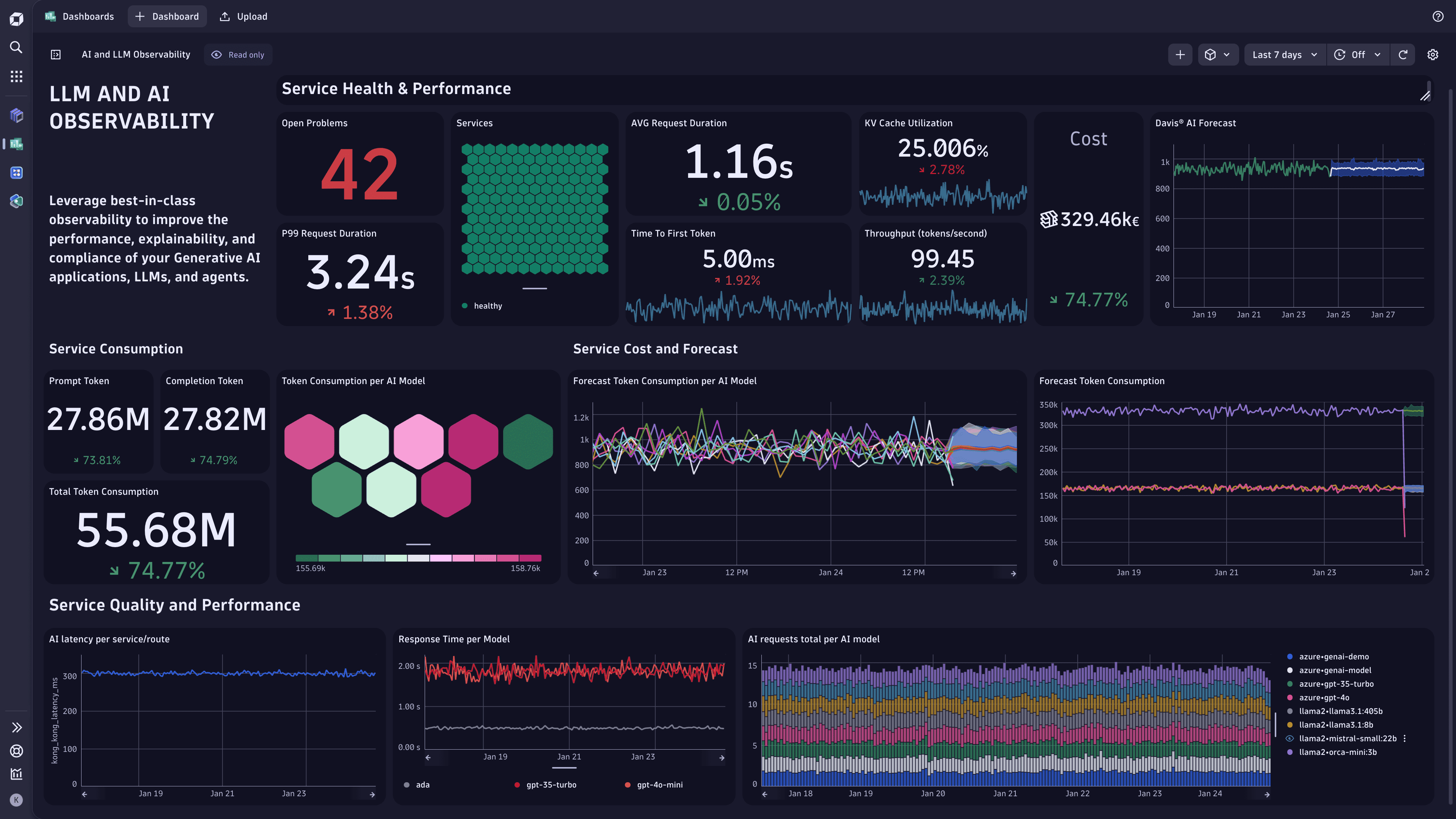
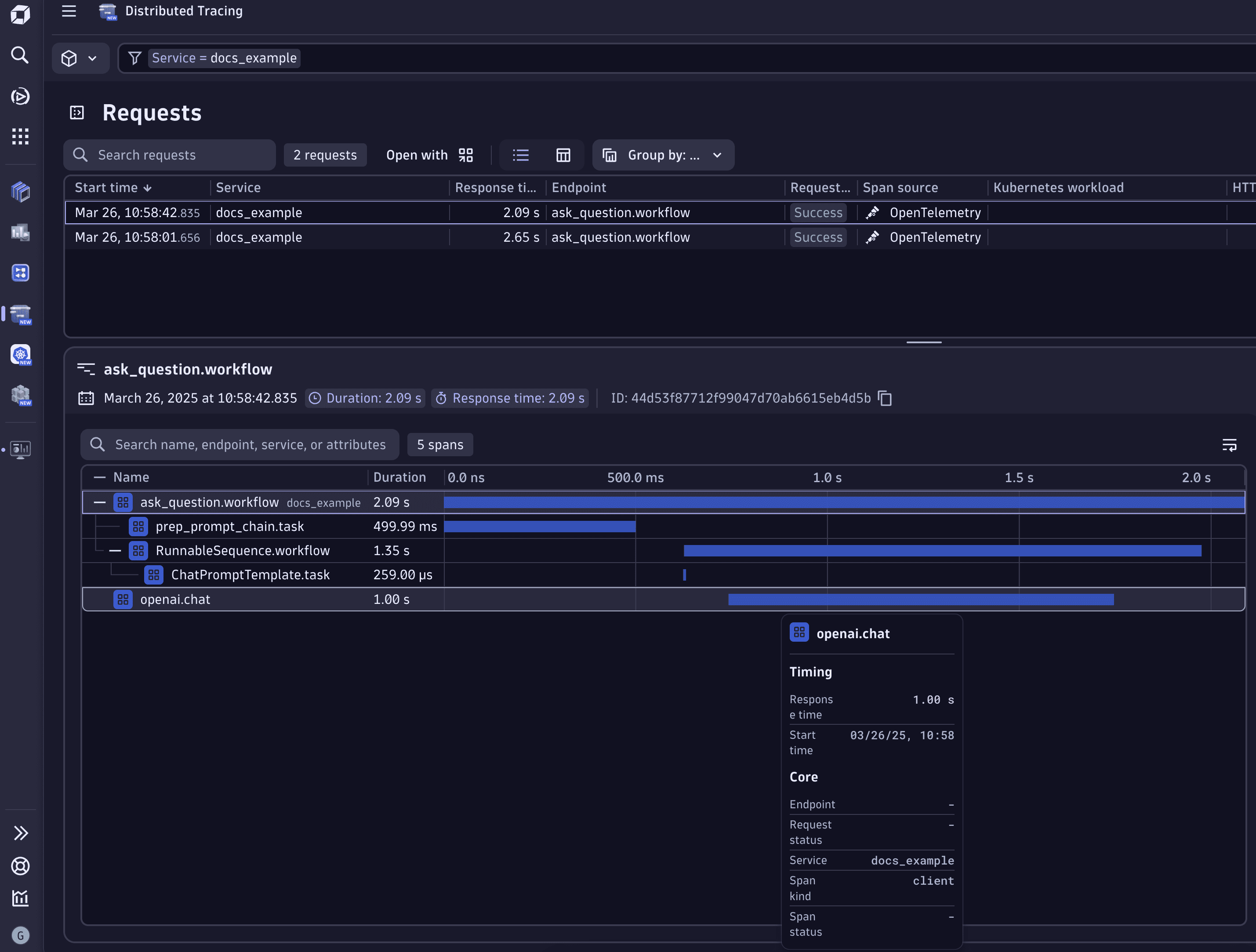 To send OpenTelemetry metrics and traces generated by OpenLIT from your AI Application to Dynatrace, follow the below steps.
### 1. Get your Credentials
1. **Log into your Dynatrace environment**
2. **Generate an API Token**:
* Go to **Settings** → **Integration** → **API tokens**
* Click **Generate token**
* Give it a name (e.g., `openlit-token`)
* Enable these scopes:
* `openTelemetryTrace.ingest` - for trace ingestion
* `metrics.ingest` - for metrics ingestion
* `logs.ingest` - for logs ingestion (optional)
* Click **Generate** and copy the token
3. **Get your Environment ID**:
* Your Dynatrace URL format: `https://{environment-id}.live.dynatrace.com`
* Extract the `{environment-id}` part from your Dynatrace URL
4. **Construct your OTLP endpoint**:
* Format: `https://{environment-id}.live.dynatrace.com/api/v2/otlp`
* Example: `https://abc12345.live.dynatrace.com/api/v2/otlp`
### 2. Instrument your application
**For direct integration into your Python applications:**
```python theme={null}
import openlit
openlit.init(
otlp_endpoint="https://YOUR_ENVIRONMENT_ID.live.dynatrace.com/api/v2/otlp",
otlp_headers="Authorization=Api-Token YOUR_DYNATRACE_API_TOKEN"
)
```
Replace:
1. `YOUR_ENVIRONMENT_ID` with your Dynatrace environment ID.
* Example: `abc12345.live.dynatrace.com`
2. `YOUR_DYNATRACE_API_TOKEN` with the API token you generated in Step 1.
```python theme={null}
import openlit
openlit.init()
```
Set these environment variables:
```shell theme={null}
export OTEL_EXPORTER_OTLP_ENDPOINT="https://YOUR_ENVIRONMENT_ID.live.dynatrace.com/api/v2/otlp"
export OTEL_EXPORTER_OTLP_HEADERS="Authorization=Api-Token YOUR_DYNATRACE_API_TOKEN"
```
Replace:
1. `YOUR_ENVIRONMENT_ID` with your Dynatrace environment ID.
* Example: `abc12345.live.dynatrace.com`
2. `YOUR_DYNATRACE_API_TOKEN` with the API token you generated in Step 1.
Refer to the OpenLIT [Python SDK repository](https://github.com/openlit/openlit/tree/main/sdk/python) for more advanced configurations and use cases.
**For zero-code auto-instrumentation via command line:**
```shell theme={null}
# Using CLI arguments
openlit-instrument \
--otlp-endpoint "https://YOUR_ENVIRONMENT_ID.live.dynatrace.com/api/v2/otlp" \
--otlp-headers "Authorization=Api-Token YOUR_DYNATRACE_API_TOKEN" \
--service-name "my-ai-service" \
--deployment-environment "production" \
python app.py
```
Replace:
1. `YOUR_ENVIRONMENT_ID` with your Dynatrace environment ID.
* Example: `abc12345.live.dynatrace.com`
2. `YOUR_DYNATRACE_API_TOKEN` with the API token you generated in Step 1.
```shell theme={null}
# Set environment variables (takes precedence over CLI args)
export OTEL_EXPORTER_OTLP_ENDPOINT="https://YOUR_ENVIRONMENT_ID.live.dynatrace.com/api/v2/otlp"
export OTEL_EXPORTER_OTLP_HEADERS="Authorization=Api-Token YOUR_DYNATRACE_API_TOKEN"
export OTEL_SERVICE_NAME="my-ai-service"
export OTEL_DEPLOYMENT_ENVIRONMENT="production"
# Run your application
openlit-instrument python app.py
```
Replace:
1. `YOUR_ENVIRONMENT_ID` with your Dynatrace environment ID.
* Example: `abc12345.live.dynatrace.com`
2. `YOUR_DYNATRACE_API_TOKEN` with the API token you generated in Step 1.
Refer to the OpenLIT [Python SDK repository](https://github.com/openlit/openlit/tree/main/sdk/python) for more advanced configurations and use cases.
### 3. View your telemetry in Dynatrace
Once your AI application starts sending telemetry data, you can explore it in Dynatrace:
1. **Navigate to Observability**: Go to **Observe and explore** in your Dynatrace environment
2. **Distributed traces**: View **Distributed traces** to see your AI application traces with LLM calls and vector operations
3. **Services**: Check **Services** to monitor your AI service performance and dependencies
4. **Metrics**: Explore custom metrics in **Metrics** for token usage, costs, and AI-specific KPIs
Your OpenLIT-instrumented AI applications will appear automatically in Dynatrace with comprehensive observability including LLM costs, token usage, model performance, and vector database operations.
To send OpenTelemetry metrics and traces generated by OpenLIT from your AI Application to Dynatrace, follow the below steps.
### 1. Get your Credentials
1. **Log into your Dynatrace environment**
2. **Generate an API Token**:
* Go to **Settings** → **Integration** → **API tokens**
* Click **Generate token**
* Give it a name (e.g., `openlit-token`)
* Enable these scopes:
* `openTelemetryTrace.ingest` - for trace ingestion
* `metrics.ingest` - for metrics ingestion
* `logs.ingest` - for logs ingestion (optional)
* Click **Generate** and copy the token
3. **Get your Environment ID**:
* Your Dynatrace URL format: `https://{environment-id}.live.dynatrace.com`
* Extract the `{environment-id}` part from your Dynatrace URL
4. **Construct your OTLP endpoint**:
* Format: `https://{environment-id}.live.dynatrace.com/api/v2/otlp`
* Example: `https://abc12345.live.dynatrace.com/api/v2/otlp`
### 2. Instrument your application
**For direct integration into your Python applications:**
```python theme={null}
import openlit
openlit.init(
otlp_endpoint="https://YOUR_ENVIRONMENT_ID.live.dynatrace.com/api/v2/otlp",
otlp_headers="Authorization=Api-Token YOUR_DYNATRACE_API_TOKEN"
)
```
Replace:
1. `YOUR_ENVIRONMENT_ID` with your Dynatrace environment ID.
* Example: `abc12345.live.dynatrace.com`
2. `YOUR_DYNATRACE_API_TOKEN` with the API token you generated in Step 1.
```python theme={null}
import openlit
openlit.init()
```
Set these environment variables:
```shell theme={null}
export OTEL_EXPORTER_OTLP_ENDPOINT="https://YOUR_ENVIRONMENT_ID.live.dynatrace.com/api/v2/otlp"
export OTEL_EXPORTER_OTLP_HEADERS="Authorization=Api-Token YOUR_DYNATRACE_API_TOKEN"
```
Replace:
1. `YOUR_ENVIRONMENT_ID` with your Dynatrace environment ID.
* Example: `abc12345.live.dynatrace.com`
2. `YOUR_DYNATRACE_API_TOKEN` with the API token you generated in Step 1.
Refer to the OpenLIT [Python SDK repository](https://github.com/openlit/openlit/tree/main/sdk/python) for more advanced configurations and use cases.
**For zero-code auto-instrumentation via command line:**
```shell theme={null}
# Using CLI arguments
openlit-instrument \
--otlp-endpoint "https://YOUR_ENVIRONMENT_ID.live.dynatrace.com/api/v2/otlp" \
--otlp-headers "Authorization=Api-Token YOUR_DYNATRACE_API_TOKEN" \
--service-name "my-ai-service" \
--deployment-environment "production" \
python app.py
```
Replace:
1. `YOUR_ENVIRONMENT_ID` with your Dynatrace environment ID.
* Example: `abc12345.live.dynatrace.com`
2. `YOUR_DYNATRACE_API_TOKEN` with the API token you generated in Step 1.
```shell theme={null}
# Set environment variables (takes precedence over CLI args)
export OTEL_EXPORTER_OTLP_ENDPOINT="https://YOUR_ENVIRONMENT_ID.live.dynatrace.com/api/v2/otlp"
export OTEL_EXPORTER_OTLP_HEADERS="Authorization=Api-Token YOUR_DYNATRACE_API_TOKEN"
export OTEL_SERVICE_NAME="my-ai-service"
export OTEL_DEPLOYMENT_ENVIRONMENT="production"
# Run your application
openlit-instrument python app.py
```
Replace:
1. `YOUR_ENVIRONMENT_ID` with your Dynatrace environment ID.
* Example: `abc12345.live.dynatrace.com`
2. `YOUR_DYNATRACE_API_TOKEN` with the API token you generated in Step 1.
Refer to the OpenLIT [Python SDK repository](https://github.com/openlit/openlit/tree/main/sdk/python) for more advanced configurations and use cases.
### 3. View your telemetry in Dynatrace
Once your AI application starts sending telemetry data, you can explore it in Dynatrace:
1. **Navigate to Observability**: Go to **Observe and explore** in your Dynatrace environment
2. **Distributed traces**: View **Distributed traces** to see your AI application traces with LLM calls and vector operations
3. **Services**: Check **Services** to monitor your AI service performance and dependencies
4. **Metrics**: Explore custom metrics in **Metrics** for token usage, costs, and AI-specific KPIs
Your OpenLIT-instrumented AI applications will appear automatically in Dynatrace with comprehensive observability including LLM costs, token usage, model performance, and vector database operations.